
What to Wear Camping: The Complete Guide to Dressing for the Outdoors
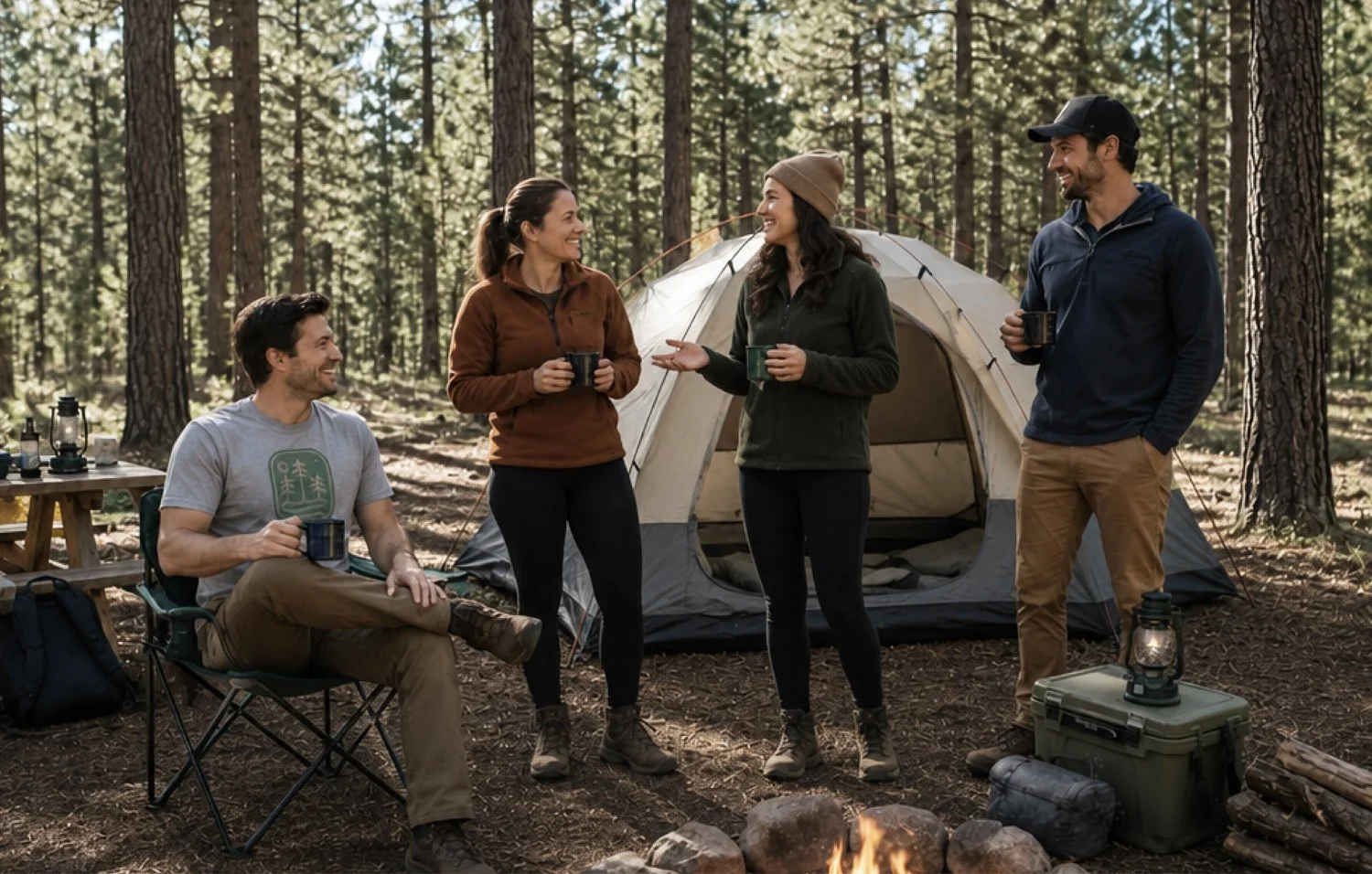
Whether you're heading out for a weekend car camping trip or a week-long backcountry adventure, knowing what to wear camping can make the difference between a miserable experience and one you want to repeat every season.
The right clothing keeps you warm when temperatures drop, dry when weather rolls in, and comfortable enough to actually enjoy being outside.
This guide covers everything from base layers and insulation to footwear, accessories, and the casual camp clothes you'll actually want to lounge around in after a long day on the trail.
Why What You Wear Camping Actually Matters
Camping exposes you to conditions you don't face in everyday life: temperature swings of 30+ degrees between afternoon and midnight, moisture from rain or morning dew, and physical exertion followed by long periods of sitting still.
The wrong clothing can soak through and leave you dangerously cold. The right clothing system manages moisture, regulates temperature, and holds up to repeated use in rough conditions.
The good news: building a solid camp wardrobe doesn't require spending thousands of dollars. It requires understanding a few core principles and making smart choices for the type of camping you actually do.
The Layering System: The Foundation of Smart Camp Dressing
Before you think about individual pieces, think in layers. Experienced campers and outdoor guides all use the same three-layer system, because it works.
Base Layer (Next to Your Skin)
Your base layer manages moisture. Its job is to pull sweat away from your skin so you don't get chilled when you stop moving.
Merino wool and synthetic fabrics (polyester, nylon) are the best options. Merino is naturally odor-resistant and temperature-regulating, and you can wear it for multiple days without it smelling. Synthetics dry faster and are more durable for the price.
Avoid 100% cotton as a base layer. Cotton absorbs moisture and holds it against your skin, which becomes a serious problem when temperatures drop. The old backcountry saying "cotton kills" exists because wet cotton is one of the leading contributors to hypothermia.
Mid Layer (Insulation)
Your mid layer traps warm air around your body. This is where fleece jackets, down vests, synthetic insulated jackets, and warm hoodies live.
The goal is warmth without too much bulk, and ideally something you can easily pull off when your hike heats you up.
Outer Layer (Shell)
Your outer layer blocks wind and precipitation. A quality rain jacket or hardshell is non-negotiable for most camping environments.
Look for waterproof-breathable fabrics like Gore-Tex and its alternatives, which keep rain out while letting sweat vapor escape.
What to Wear Camping: A Breakdown by Clothing Category
Base Layers and Tees: The Underrated Core of Your Camp Kit
Most people don't think hard enough about their base layers and everyday camp tees, and then they spend three days in a soggy, heavy shirt wondering why they're cold.
For active hiking days, a lightweight merino wool or synthetic tee is ideal. But for around-camp wear, morning coffee, sitting by the fire, and casual walks to the trailhead, a well-made graphic tee in a fabric blend that balances comfort with performance is one of the most versatile pieces you can pack.
The key is fabric. A blend of combed ring-spun cotton and polyester hits a sweet spot that pure cotton simply can't.
The tees from North Adams are made with 60% organic combed ring-spun cotton and 40% polyester. The cotton gives you the soft, breathable feel of a quality tee, while the polyester adds durability, shape retention, and moisture management that straight cotton can't offer.
Combed ring-spun cotton specifically removes shorter, weaker fibers, leaving a smoother, stronger yarn that holds up to repeated washing and rough outdoor conditions better than standard cotton.
North Adams carries a range of outdoor-themed graphic tees in hiking, fishing, mountain, and nature-inspired designs that work perfectly as camp layers. They're the kind of shirt you actually want to wear, not just the shirt you grabbed because it was convenient.
Pack two to three tees for a weekend trip, rotating between a performance layer for hiking and a comfortable cotton-blend tee for camp.
Hoodies and Mid Layers: Your Most-Worn Camp Garment
If there's one piece of clothing that defines the camping experience, it's the hoodie. You'll throw it on in the morning before the sun comes up, wear it through a cool afternoon, and pull it on again around the fire after dark.
A quality hoodie is arguably the most important thing you pack.
What makes a good camp hoodie? Warmth, durability, and comfort in equal measure, with a hood that actually works when weather rolls in.
North Adams hoodiesare built for this kind of use. They're warm without being so heavy they become a burden, and durable enough to handle campfire smoke and rough trail conditions.
They're a midweight option that works from early spring through fall camping and serves as a genuine insulating layer in shoulder seasons.
Pants: Comfort and Function for the Trail and Camp
Hiking pants and camp pants are not the same thing, and ideally you'd pack at least one of each.
Hiking pants should be lightweight, quick-drying, and articulated for movement. Look for:
Nylon or polyester blends that dry fast and resist abrasion
Articulated knees for unrestricted movement on uneven terrain
Zip-off convertible options if you're camping in variable weather
Camp pants are what you change into when you get back to the campsite. Softshell pants, fleece-lined joggers, or even a solid pair of sweatpants work well. The goal is warmth and comfort, not performance.
What about jeans? Jeans are heavy, slow to dry, and restrict movement. They're generally a poor choice for anything involving a trail. For car camping with no hiking, they're fine. For any active camping, leave them at home.
Rain Gear: Non-Negotiable for Most Environments
Rain jackets are the piece of camping clothing most people skip until they get caught in a downpour and regret it deeply.
A good rain jacket should be:
Waterproof, not just water-resistant. Look for taped seams and a DWR (durable water repellent) coating.
Breathable. Gore-Tex, eVent, or similar membranes prevent you from sweating out inside your own jacket.
Packable. It should compress small enough to live in the top of your daypack permanently.
Rain pants are worth considering for multi-day trips or shoulder-season camping when sustained rain is likely.
Insulated Jackets: When Temps Drop Seriously
For cold-weather camping at high elevation, in shoulder season, or in the mountains, an insulated jacket becomes essential rather than optional.
Down insulation is warmer by weight and compresses smaller, making it ideal for backpacking. The downside is that it loses insulating ability when wet. Look for hydrophobic, water-resistant down treatments from brands like Rab, Arc'teryx, and Patagonia.
Synthetic insulation performs even when damp, dries faster, and is generally more affordable.
For base camp or car camping in cold conditions, a puffy vest layered over a hoodie can be a highly versatile and packable solution.
Socks: The Overlooked Essential
Never underestimate good socks when camping. Wet, blistered feet can end a trip faster than almost anything else.
Wool hiking socks regulate temperature, resist odor, and cushion your feet on long hiking days. They're worth every penny over drugstore cotton tube socks, which compress quickly and provide zero insulation when wet.
For camp, a pair of thicker wool socks or even a dedicated pair of warm tent socks can dramatically improve your comfort after you take your boots off.
Pack more socks than you think you need. At minimum, one fresh pair per day.
Footwear: Matching Your Boots to Your Terrain
Hiking boots are the obvious choice for trail-heavy camping, but not all hiking boots are created equal.
Lightweight trail runners are preferred by many backpackers for their speed and packability, but they provide less ankle support
Mid-cut hiking boots support with versatility and are ideal for most campers
High-cut mountaineering boots are for technical terrain and glacier travel, and are overkill for most trips
Camp shoes are a separate pair of lightweight footwear to change into at camp. They're a luxury that quickly feels like a necessity.
Crocs have become the unofficial camp shoe of the hiking community, and for good reason. They're lightweight, easy to clean, and slip on and off without bending over.
Hats, Buffs, and Sun Protection
Sun protection is often underestimated, especially at elevation where UV exposure increases about 10% per 1,000 feet. A wide-brim hat protects your face, neck, and ears on exposed trail sections.
Beanies become essential once the sun goes down. Wool or fleece beanies can be packed flat and stuffed into any pocket.
Buffs and neck gaiters are arguably the most versatile piece of gear per ounce that you can carry. Wear them as a neck warmer, face covering, thin hat, or sun shield depending on conditions. Any tubular neck gaiter works.
Gloves: Don't Get Caught Without Them
Even in summer, temperatures can drop dramatically at elevation and after dark. A lightweight pair of liner gloves pack flat and can save you serious misery on a cold morning. For shoulder-season or higher-elevation camping, add a heavier fleece or insulated glove.
What to Wear Camping by Season
Spring Camping
Spring is the trickiest season. Conditions can swing from warm afternoons to near-freezing nights, with unexpected rain or snow mixed in.
Pack your full layer system, prioritize waterproofing, and bring more insulation than you think you'll need.
Essentials: base layer, fleece hoodie, insulated jacket, rain shell, wool socks, waterproof or water-resistant footwear.
Summer Camping
Summer camping allows lighter packing, but don't skip the layers. Morning and evening temperature drops are real even in July, and mountain environments can produce afternoon thunderstorms on short notice.
Essentials: lightweight tees, including a quality camp tee for hanging around, such as the North Adams Classic Crew Tee shorts, one warm layer (a good hoodie covers most needs), rain shell, sun hat, sunglasses.
Fall Camping
Fall is arguably the best camping season. Fewer bugs, beautiful foliage, and cooler temps make it a favorite for many campers. But it demands more preparation in the clothing department. Temperatures drop fast in October, and precipitation becomes more likely.
Essentials: base layer top and bottom, mid layer (fleece or insulated hoodie), insulated jacket, rain shell, warm hat, gloves, wool socks, insulated water bottle.
Winter Camping
Winter camping is a serious undertaking that requires specialized gear. If you're doing it, you probably already know the drill.
The key additions: a heavyweight insulated jacket (down or synthetic), insulated bib pants or hardshell pants over fleece pants, heavyweight gloves and liner gloves, a balaclava, and wool or moisture-wicking base layers in multiple weights.
What NOT to Wear Camping
A few things to leave at home:
100% cotton in wet or cold conditions absorbs moisture, holds it, and provides zero insulation when wet
Denim jeans are heavy, slow to dry, and uncomfortable for hiking
Brand new boots on a long trip will cause blisters. Break them in at home first.
Flip flops on trail are for camp only. Never wear them on technical terrain.
Dark colors in bug country attract mosquitoes. Light colors help.
Tight, restrictive clothing prevents layers from breathing and trapping air properly
Packing List: What to Wear Camping for a 3-Day Weekend Trip
Tops
1 lightweight performance tee (hiking)
2 comfortable camp tees (something you actually want to wear)
1 midweight fleece or hoodie
1 insulated jacket or vest
1 rain shell
Bottoms
1 pair hiking pants or shorts
1 pair camp pants or warm joggers
1 pair rain pants (optional, based on forecast)
Footwear
Hiking boots or trail runners
Camp shoes (Crocs, sandals)
3+ pairs of wool or synthetic socks
Accessories
Sun hat or baseball cap
Warm beanie
Buff or neck gaiter
Liner gloves (or heavier gloves if cold)
Sunglasses (UV-rated)
Underwear
Moisture-wicking underwear (merino or synthetic)
Sports bra if applicable
Final Thoughts on What to Wear Camping
Knowing what to wear camping comes down to a few core ideas: layer intelligently, choose fabrics that perform when wet or sweaty, and don't forget the basics like sun protection and warm socks.
Beyond function, the clothing you camp in should be stuff you actually enjoy wearing. Part of the joy of camping is feeling at home in the outdoors.
A quality graphic tee with a mountain design, a broken-in hoodie around the campfire, a warm beanie pulled over your ears as the stars come out. That's as much a part of the camping experience as the gear in your pack.
Choose pieces that reflect the way you want to feel outside, and you'll be glad you did.
For outdoor-inspired graphic tees and durable midweight hoodies made for real camping use, explore the collection at North Adams where you’ll find independent artist designs on quality fabrics built for people who appreciate being outside.
